Specialist knowledge of energy saving glass
We consider energy saving glass alongside the blind style, room conditions, glass dimensions and controls so the complete sealed unit works together.
Low-emissivity glazing options improve heat retention while still allowing high levels of natural light.
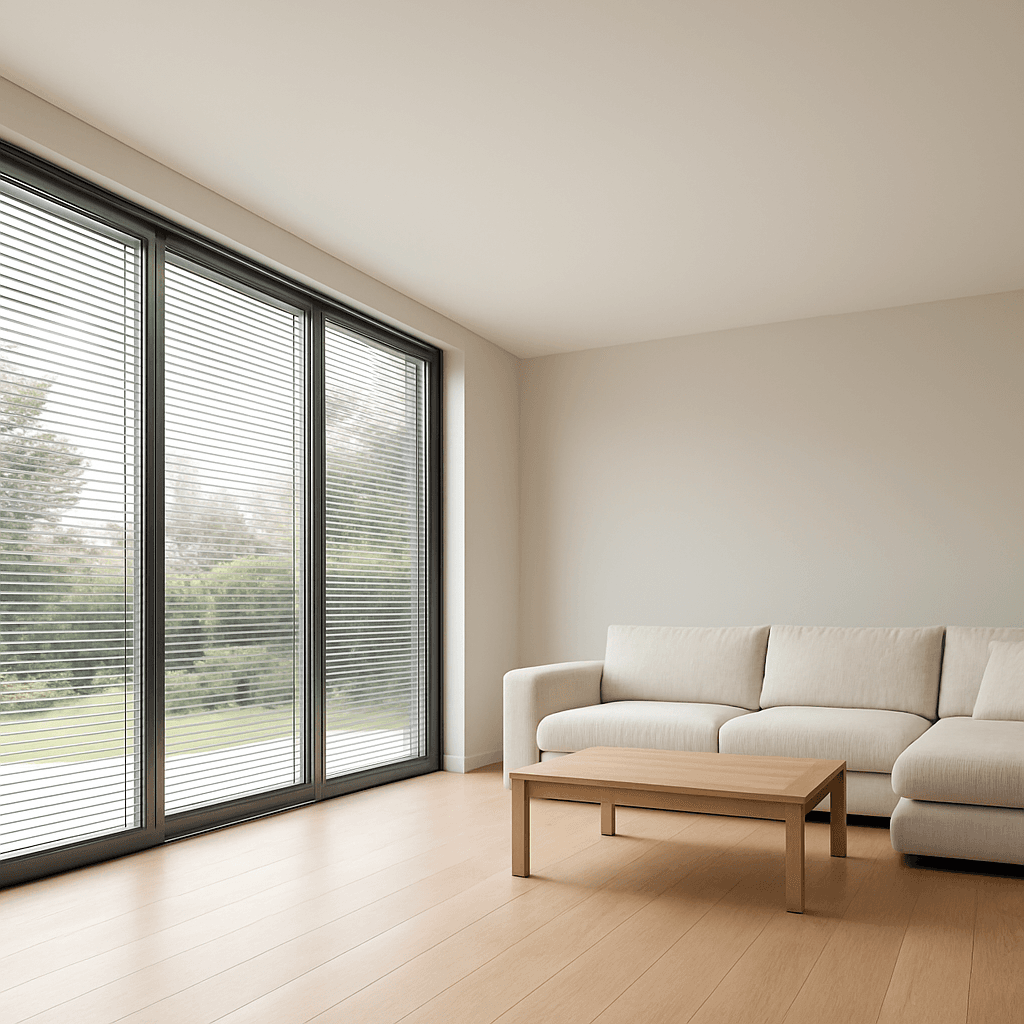
Energy Saving Glass is considered alongside the blind type, cavity, frame depth and control route. The survey makes sure the replacement unit works as a complete sealed-glass specification, not just as an isolated glass upgrade.
Cold-feeling glazing or a comfort-led replacement where published low-emissivity values matter.
The sealed unit can use a low-emissivity specification while the blind handles day-to-day privacy and shading.
Energy saving glass uses a low-emissivity coating and argon-filled cavity specification to reduce heat loss through the sealed unit. Morley supplier information lists Low E+ and Low E One performance values for 4(16)4 units with 90% argon.
The selected blind system, cavity, glass thickness and unit size are checked before we confirm energy saving glass with blinds inside glass.
Product information is based on public Morley Glass and Uni-Blinds supplier documentation checked in June 2026.
Why work with us
We combine product knowledge with a complete measuring, supply and installation service for energy saving glass.
We consider energy saving glass alongside the blind style, room conditions, glass dimensions and controls so the complete sealed unit works together.
We use Morley Glass sealed units with ScreenLine integral blind systems, made and tested as a complete unit before installation.
We check your frames, glass dimensions, clearances and controls so the specification is agreed before your units are made.
Our team supplies and installs the new glass, tests the blinds and controls, and explains the relevant care and guarantee information.
A tighter image set keeps each glass page focused on the room, opening type and product detail that matter to that specification.
Tell us about the windows or doors, existing frames and main priority. We will use those details to plan the next survey or quote step.